
 © Musik und Bühne
14th Austrian Music Theatre Award
LETTERS FROM RUTH "Best Production of a Musical"
The chamber musical by Aksel-Otto Bull and Gisle Kverndokk received the 14th Austrian Music Theater Award last Tuesday for best musical production, as presented by the Vienna Chamber Opera.
It tells the story of a young Jewish girl who flees from Vienna to Norway in 1939 to escape the Nazis and live in freedom there — until Norway, too, is occupied.
This powerful musical is based on Ruth Maier’s real diaries, letters and drawings, which bear witness to her unbridled zest for life.
Read the report on the winners of the 14th Austrian Music Theater Award here
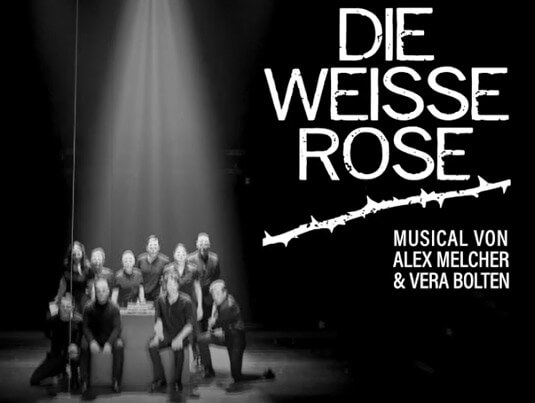
Review from "Musicalzentrale"
Live-CD: "Die Weisse Rose"
We are delighted to share the first press reviews of the CD release of the musical DIE WEISSE ROSE.
According to “musicalzentrale,” the cast recording is thoroughly compelling and reveals new facets of the musical.
The musical about the resistance group “Die Weiße Rose” toured throughout Germany this summer. Following that, it can now be enjoyed on this CD.
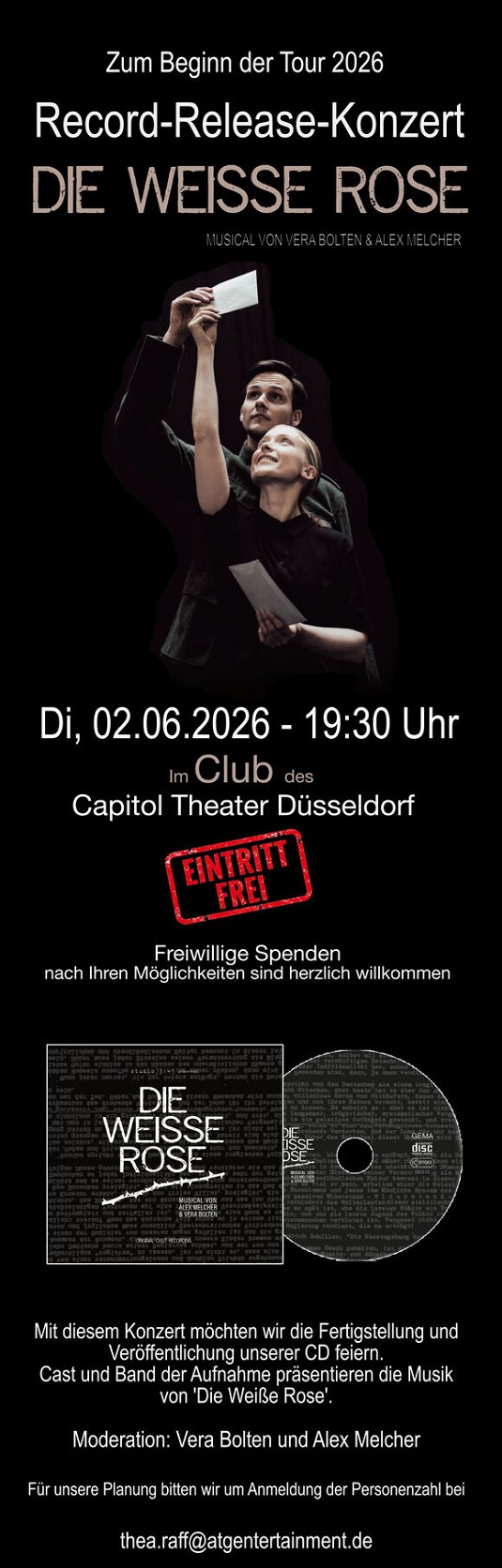
Record release to celebrate the cast recording
DIE WEISSE ROSE - CD Release
To coincide with the tour’s launch, the music from DIE WEISSE ROSE will also be available on CD starting June 5, 2026. This milestone for the award-winning new musical will be celebrated with a record-release concert featuring the original cast and band on June 2, 2026, at the Capitol Theater in Düsseldorf. The creative team behind the production will guide the audience through the program: Vera Bolten and Alex Melcher.
The audience can look forward to an evening filled with powerful music. Strong, lyrical texts bring the "Weiße Rose" resistance and the story of Hans and Sophie Scholl to life in a way that is both poignantly disturbing and deeply moving.
Further information about the CD release can be found here.
Everything about the production at a glance is available here.